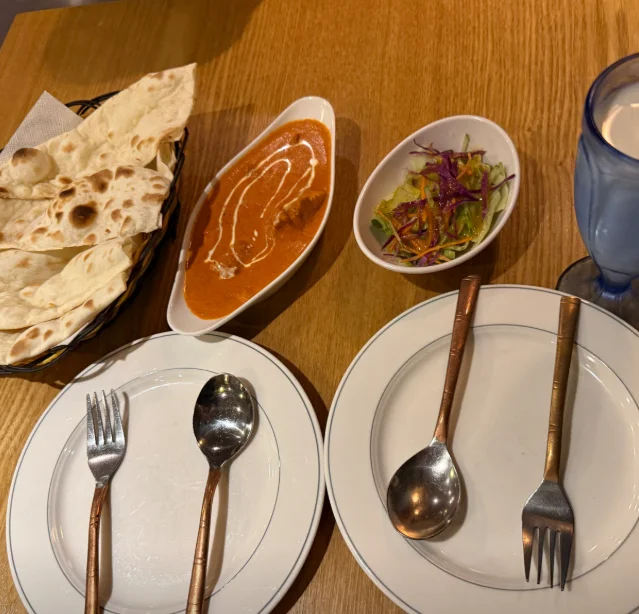
Halal Restaurants in Seoul by Neighborhood: Where They Are and How to Get Them Delivered
Seoul has only 122 halal-certified restaurants — but where they are, whether they deliver, and how to verify halal status varies dramatically by neighborhood. A practical guide for Muslim travelers in Myeongdong, Gangnam, Hongdae, and beyond Itaewon.
Most halal travel guides for Seoul tell you the same thing: go to Itaewon. And they are not wrong. Itaewon has the highest concentration of halal-certified restaurants in Seoul, the longest history of serving Muslim travelers, and the most visible mosque in Korea (Seoul Central Mosque, opened in 1976). But if you are staying in Myeongdong, Gangnam, or Hongdae — where most of Seoul's tourist hotels actually are — "go to Itaewon" is not a meal plan. It is a commute.
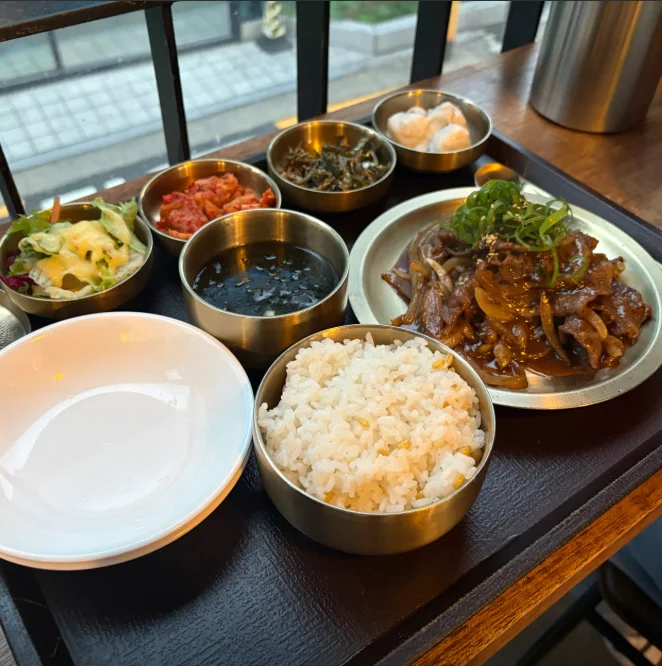
This guide covers what actually exists outside Itaewon, neighborhood by neighborhood, and what it takes to get halal food delivered to a hotel address in 2024.
The Supply Problem in One Number
Seoul has approximately 820,000 registered restaurants. Of those, 122 are halal-certified by the Korea Muslim Federation (KMF). That is 0.01% of the total food supply, serving a visitor segment that numbered 760,000 people in 2023 — up from 359,000 the year before. Nationwide, the figure rises to 278 certified restaurants across all of Korea.
For reference: the Mastercard Muslim Travel Index scores Korea's halal food infrastructure at 42 out of 100. Japan, which also has a small domestic Muslim population, scores noticeably higher. Singapore, a regional hub for Muslim travel, scores 90.
The 122 number is not a secret. It appears in KTO reports and academic research on Muslim tourism in Korea. What the number does not tell you is which of those restaurants deliver, which neighborhoods they cover, and which are still actually open — because the KTO list includes restaurants that have since closed.
Neighborhood by Neighborhood: What Actually Exists
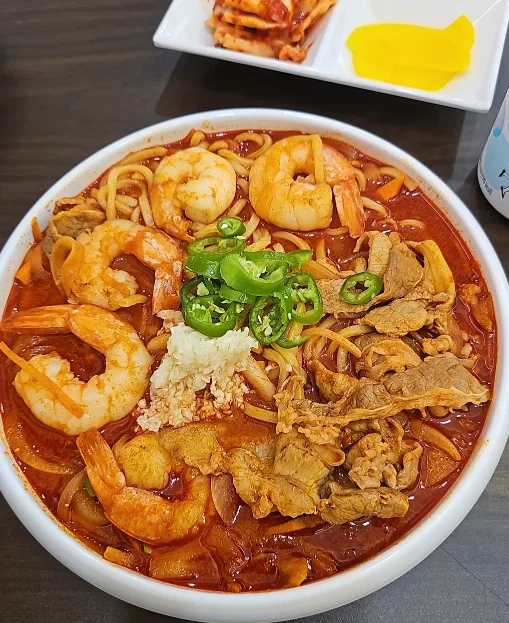
Itaewon
Itaewon is genuinely well-served. Within a few hundred meters of Seoul Central Mosque, you will find certified halal restaurants serving Turkish, Middle Eastern, Pakistani, Malaysian, Indonesian, and halal Korean cuisine. These restaurants know their customer base, display KMF certification visibly, and some deliver within the Itaewon/Hannam radius. If you are staying in Itaewon, the situation is manageable — not Singapore-level, but workable.
The problem is that most international tourists do not stay in Itaewon. The major tourist hotel clusters are in Myeongdong, Gangnam, Hongdae, and near Gyeongbokgung. Getting to Itaewon from Myeongdong is 20 to 40 minutes each direction depending on traffic.
Myeongdong
Myeongdong is Korea's most tourist-dense shopping district, and the halal situation there is better than most guides suggest — but inconsistently so. A handful of halal street food vendors operate in the outdoor market area, and a small number of restaurants near the main street have KMF certification. The street food options tend to be meat skewers and fried snacks, not full meals.
Delivery from certified Myeongdong restaurants to nearby hotels is inconsistent. Some restaurants are dine-in only or have small delivery radii. The density of halal options has improved in recent years but remains thin relative to foot traffic.
Hongdae
Hongdae, the university and nightlife area near Hongik University, has very few halal-certified options. Some smaller halal-friendly restaurants exist near the area but are not well-documented in English and may not accept delivery orders. Hongdae is effectively a gap neighborhood for Muslim travelers.
Gangnam
Gangnam is the most underserved major tourist and business district for halal food in Seoul. Certified halal options are nearly nonexistent. The Korean business district assumption — that guests can eat at the standard hotel restaurant or any Korean restaurant — does not account for dietary requirements that require ingredient verification. Business travelers staying in Gangnam for extended periods face this most acutely.
Dongdaemun / Sinchon / Anam
These neighborhoods have small pockets of halal options, typically restaurants serving the international student population at nearby universities. The options are more diverse in cuisine than many expect (Malaysian, Indonesian, Bangladeshi, Pakistani), but they are poorly documented in English and rarely deliver through standard apps. Finding them requires local knowledge or a Korean-language search.
The Delivery Gap: Why Location Alone Is Not Enough
Knowing that a halal restaurant exists two kilometers from your hotel does not mean you can get food from it. Korean food delivery apps have three layers of friction for foreign travelers:
Registration: Baemin and Coupang Eats both require a Korean phone number to create an account. A tourist on a foreign SIM cannot register.
Delivery radius: Each restaurant sets its own delivery zone. A halal restaurant in the eastern part of Itaewon may not deliver to a hotel in the western part of Itaewon — let alone to Myeongdong. There is no workaround within the app.
No halal filter: Even if you could register, neither app has a halal category. Searching the term returns inconsistent results and no certification information.
These three problems compound each other. The result is that even when a Muslim traveler knows exactly which restaurant they want and that restaurant is technically within delivery range, the standard app path is effectively closed.
The Verification Problem: What the List Does Not Tell You
The KMF certification list is the most reliable source of confirmed halal restaurants in Korea. But it has real limitations:
Certification is voluntary. A restaurant that is halal-compatible — using halal meat, no pork, no alcohol in cooking — may never have applied and will not appear on any official list.
The KTO-published list includes restaurants that have closed. Travelers have reported arriving at addresses that are now convenience stores or construction sites.
Certification does not cover every dish. A restaurant may hold KMF certification for beef dishes while using non-halal chicken or pork-based broths for other menu items.
Cross-contamination practices vary. Shared fryers, shared prep surfaces, and shared utensils are not standardized. A restaurant can be certified without controlling for cross-contamination in every preparation.
For travelers who need strict halal compliance, the only way to resolve these questions is a phone call in Korean to the restaurant, asking about the specific dish, the specific preparation, and the specific sourcing — before the order is placed.
How DOWAME Handles This
DOWAME is a concierge service for foreign tourists in Seoul and Busan. For Muslim travelers, the process works like this:
Finding options near your hotel. We identify both KMF-certified restaurants and halal-compatible restaurants in or near your neighborhood — not limited to the Itaewon cluster, and not limited to the list you would find on a travel blog.
Verification by phone before every order. We call the restaurant in Korean and ask the questions that matter: broth composition, cooking oils, shared fryers, alcohol in sauces, meat sourcing. We relay the answers to you before confirming. We verify facts — we do not certify restaurants.
Delivery coordination outside the standard radius. When a restaurant cannot deliver directly to your hotel address, we coordinate pickup or alternative arrangements.
No Korean phone number or Korean card required. We handle registration, the order, and payment. You receive the food.
Concierge support runs from 9 AM to midnight KST, every day.
FAQ
Which neighborhoods in Seoul have the most halal food options?
Itaewon has by far the highest concentration of certified halal restaurants in Seoul. Myeongdong has a smaller but meaningful number of halal street food vendors and a few certified restaurants. Dongdaemun, Sinchon, and Anam have scattered halal-friendly options that serve the international student community but are not well-documented in English. Gangnam and Hongdae have very limited options.
Is the KTO halal restaurant list accurate?
The KTO (Korea Tourism Organization) list is a useful starting point but has known accuracy issues — it includes restaurants that have since closed, and it is not always updated in real time. Before visiting any restaurant based on the list, confirm the address and hours by phone. If you cannot make that call in Korean, a concierge service can do it for you.
Can I get halal food delivered from Itaewon to Myeongdong?
In most cases, no — not through standard delivery apps. Itaewon restaurants set delivery radii that typically cover adjacent Itaewon neighborhoods but do not reach Myeongdong, which is about 5 kilometers away. Standard apps (Baemin, Coupang Eats) also require a Korean phone number for registration. A concierge service that can place orders on your behalf and coordinate pickup or extended delivery is the most reliable option.
Are there halal options at Korean convenience stores?
Korean convenience stores (GS25, CU, 7-Eleven) do not label products as halal. Some products are naturally pork-free, but alcohol is used in some food products and is not always labeled visibly. For snacks and drinks, read labels carefully or ask a Korean speaker to help. Convenience stores should not be relied on as a halal food source without verification.
What should I do if I'm staying in Gangnam and need halal food?
Gangnam has almost no certified halal restaurants within the district. The practical options are: ask your hotel concierge if they have any local contacts (some international business hotels have addressed this), use a concierge service that can identify halal-compatible restaurants nearby and verify ingredients in Korean, or travel to Itaewon for the meal. DOWAME can help identify which local Gangnam-area restaurants can accommodate halal requirements through ingredient verification.
Staying in Seoul and need halal food delivered to your hotel — wherever you are, not just in Itaewon? DOWAME finds halal-certified and halal-compatible restaurants near your location, verifies ingredients in Korean before confirming your order, and coordinates delivery or pickup without requiring a Korean phone number or card. Available from 9 AM to midnight KST.